Research · Published October 2026
By Marin Tintchev, Founder, GeoSynapse & China GEO EU
From Stuttgart to Shenzhen: Before the First Call, Your Buyers May Already Have Asked AI About You
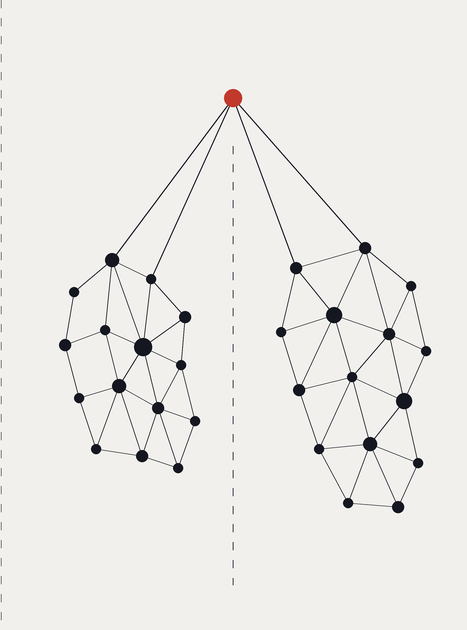
Imagine a mid-sized company that needs a new supplier of industrial components. Five people sit on the buying committee. The engineer asks an AI assistant which suppliers meet a certain standard. The procurement manager asks how three of them compare on delivery risk. The finance lead asks what is publicly known about one supplier's ownership. Nobody phones a supplier or visits a website. The supplier whose name came up, or did not, has no idea that any of this happened.
The scene is constructed, not a case. The sections below set out what surveys say about each step in it.
Who decides, and when does the supplier find out?
In its 2026 buyer insights release, Forrester describes a typical buying decision as involving 13 internal stakeholders and nine external influencers, with procurement professionals as decision-makers in 53% of buying cycles[1].
The group also tends to have a shortlist before it talks to anyone. In 6sense's 2025 study of nearly 4,000 B2B buyers, first contact with a vendor came about 61% of the way through the buying journey, and buyers chose a vendor from their day-one shortlist 95% of the time[2]. In its European sample, 945 buyers in Belgium, France, Germany, the Netherlands and Sweden, the figures were about 58% and 92%[3]. Gartner found that 67% of B2B buyers prefer a rep-free buying experience[4].
Do buyers use AI, and do they trust the answer?
How many buyers use AI depends on who is asked and how. Gartner reports that 45% of B2B buyers used generative AI in a recent purchase[5]. A TrustRadius survey of technology buyers, fielded in January 2026, reports 63%[6]. The 6sense report says 94% of buyers use large language models[2]. These numbers come from different questions, different buyers and different times, so they show a direction, not a precise figure: AI is now widely used.
What buyers do with the answer is more consistent. In Gartner's survey, 69% prefer to validate AI-generated insights with sales representatives[5]. In TrustRadius' survey, 94% of those who used AI said they fact-check its responses at least some of the time, and 2% said they always trust it. The same survey found that 74% of buyers consulted user reviews and 53% spoke to a peer who used the product they were evaluating[6].
What does this mean for a supplier?
Two things follow. The committee can form a first impression from an answer you did not write, and that answer can be wrong, out of date or different tomorrow.
We have looked at both. "Why AI Answers Change Between Runs — And What That Means for Measuring Visibility" sets out, from independent research, why the same question can return different answers. When we tested five Western assistants on a pre-launch company, as described in "What AI Answers When It Has Never Heard of Your Company", several returned a former role as current and some read its name as something else. And in our audit of our own visibility, described in "We Grew a B2C Business on AI Visibility, from Scratch. How Does It Work in B2B?", none of five assistants named us among the providers in September; three did in a re-audit a month later, and answers still changed between sessions on the same day.
Is the pattern the same in Europe and in China?
OpenAI and Anthropic do not list mainland China among their supported countries, and Google lists mainland China for the Gemini web app for Workspace accounts only[7][8][9]. Chinese users go to domestic assistants: CNNIC's 2025 report, as relayed by Beijing News, says that over 90% of generative AI users first choose a domestic model[10]. China had 602 million generative AI users at the end of 2025, 42.8% of the population, according to CNNIC[11]. In a July 2026 iResearch online survey of 1,000 Chinese consumers aged 18 and over who had recently bought consumer goods and had used AI search, 56.6% said that if an AI answer did not satisfy them, they would look for related content on e-commerce or social platforms, the most common of several options[12]. In a remote qualitative study of six participants in China, Nielsen Norman Group observed that participants started with generative AI and then consistently turned to social apps such as Rednote, Douyin and Bilibili to validate what they found[13].
For company buyers, the same iResearch report surveyed 501 employees of Chinese companies, in departments from procurement to marketing, IT, finance and R&D. 35.87% said they often and 55.31% occasionally use AI when looking up suppliers[12].
The sources the assistants rely on differ too. A QuestMobile study (April 2026 data) of AI answers to car, travel and insurance questions found that Doubao often cited Douyin and Toutiao in travel answers. On car-model questions, Qwen's most-cited source was Dongchedi and DeepSeek's was Yiche; on travel questions, Qwen drew on Dianping and Bilibili and DeepSeek on NetEase and Sohu[14].
Our reading is that this is the same buyer behavior in a different environment. In the European and global surveys above, buyers validate the answer from AI with sales representatives, user reviews and peers. In China, the studies we found point to social platforms and e-commerce. The structural background, a few dominant domestic platforms operating under Chinese filing requirements, and sources that in our reading are largely separate from the Western ones, is described in our earlier pieces "Cross-Ecosystem, Not Cross-Border: Why China and Europe Aren't Symmetrical AI Environments" and "The Regulatory Layer Western Companies Don't See — And Why It Shapes What Gets Cited".
In practice, being visible and accurate in AI answers in one market does not carry over to the other: in our reading, the buyer in Stuttgart and the buyer in Shenzhen go to different places to confirm what the assistant told them.
What question remains for a supplier?
For a supplier, the open question is what the buying committee has already read before the first message arrives, and where each of its members went next to check it.
References
- Forrester, "Forrester's 2026 Buyer Insights: GenAI Is Upending B2B Buying As Leaders Face Mounting Pressure To Justify Every Dollar Spent," press release, 21 January 2026 — forrester.com.
- 6sense, "2025 B2B Buyer Experience Report" — 6sense.com.
- 6sense, "How European B2B Buying Journeys Differ (and Don't) From the Rest," 12 November 2025 — 6sense.com.
- Gartner, "Gartner Sales Survey Finds 67% of B2B Buyers Prefer a Rep-Free Experience," press release, 9 March 2026 (survey of 646 B2B buyers, August–September 2025) — gartner.com.
- Gartner, "Gartner Survey Finds 69% of B2B Buyers Turn to Sales Reps to Validate AI-Generated Insights," press release, 20 May 2026 (survey of 645 B2B buyers, August–September 2025) — gartner.com.
- TrustRadius, "Beyond the Hype: The AI Bubble that Isn't Bursting (Yet)," 15 July 2026 (survey of technology buyers, January 2026) — trustradius.com.
- OpenAI, "ChatGPT Supported Countries," OpenAI Help Center, viewed 27 October 2026 — help.openai.com.
- Anthropic, "Supported countries and regions," viewed 27 October 2026 — anthropic.com.
- Google, Gemini Apps Help, availability by country (mainland China: Workspace only), viewed 27 October 2026 — support.google.com.
- CNNIC, Generative AI Application Development Report (2025), as reported by Beijing News, "我国生成式人工智能用户超5亿人,具身智能成产业发展热点", 18 October 2025 — bjnews.com.cn.
- CNNIC, 57th Statistical Report on Internet Development in China, March 2026 — cnnic.cn.
- iResearch, AI search insight for consumer decision scenarios: differentiated GEO strategies for key industries in 2026, July 2026 (Chinese-language report; title translated) — pdf.dfcfw.com.
- Nielsen Norman Group, "Information Seeking in China: A Different Ecosystem, Familiar Behavior," Feifei Liu and Maria Rosala, 1 May 2026 — nngroup.com.
- QuestMobile, report on AI platforms' source preferences (April 2026 data), as published by 36Kr, 26 May 2026 (Chinese-language report; title translated) — 36kr.com.
Frequently asked questions
Does this show that an AI answer decides which supplier a committee picks?
No. The surveys we cite measure whether buyers use AI and what they do with the answer, for example validating it with sales representatives, reading user reviews or asking a peer. They do not measure how much weight an AI answer carries in the final choice.
Why do the survey figures on buyers' use of AI differ so much?
Gartner reports 45% for generative AI in a recent purchase, a TrustRadius survey of technology buyers reports 63%, and 6sense reports 94% for large language models. They ask different questions of different buyers at different times, so they show a direction, not one figure: AI is now widely used.
Do Chinese buyers use the same AI assistants as European buyers?
In general, no. OpenAI and Anthropic do not list mainland China among their supported countries, and Google lists it for the Gemini web app for Workspace accounts only. CNNIC's 2025 report, as relayed by Beijing News, says that over 90% of generative AI users first choose a domestic model.
Related insights
Insight
Beyond B2B vs B2C: Does Your AI Visibility Strategy Fit Your Business?
B2B or B2C says who the transaction is with, not whose questions an AI system must answer. A four-layer way to look at AI visibility.
Insight
We Grew a B2C Business on AI Visibility, from Scratch. How Does It Work in B2B?
A yacht business grew from scratch on AI visibility. We then ran the same method on a B2B company with no ads: baseline audit, foundations, re-audit.
Insight
What AI Answers When It Has Never Heard of Your Company
We asked five AI platforms about our company before it had a website. What came back: misread acronyms, outdated facts and confident lists.
About the author
Marin Tintchev is the founder of GeoSynapse and China GEO EU. He has 30+ years in ICT and international business across China and Europe, was educated at Tsinghua University, and is fluent in Mandarin.